The Axis on My Plate: Care, Killing, and Exotic Meat in Texas
Alexandra Holdbrook, PhD Candidate
UT San Antonio Department of Anthropology
“You hungry?” Gary asks as I sit across from him at the small kitchen table in his home in the Texas Hill Country. Without waiting for an answer, he crosses to the refrigerator and pulls out a large cast-iron pot of chili and a rectangular foil packet. He sets the pot on the stove, unwraps the foil, and cuts small chunks from the slab of cooked meat inside, dropping them into the pot. With a wry smile, he extends a piece of meat toward me. “Ever try axis?”
“I haven’t,” I admit. Despite living my entire life in the Hill Country, I’ve somehow managed to avoid the local delicacy of axis deer venison. As I spear the meat with my fork, I think of the axis deer that visit my yard a few times each year in search of food and water. Catching glimpses of their deep chestnut coats and white spots through the live oak trees never fails to thrill me. Their dark eyes track my movements as I watch them in turn, always poised to flee the moment I cross an invisible boundary of safety.
The animal I am about to eat is one of hundreds of thousands of axis deer that now free-range across the privatized landscape of south-central Texas. Native to the Indian subcontinent, axis deer were among the first exotic ungulates introduced to the Edwards Plateau beginning in the 1930s (Traweek & Welch, 1992). Over the past century, more than one hundred species of hoofed mammals from Africa, Asia, and Europe have followed, transforming the Hill Country into what is often called the “Exotic Wildlife Capital of North America” (Mungall & Sheffield, 1994). Behind and beyond the fences that inscribe property boundaries into the landscape, a stunning variety of non-native antelope, deer, and gazelle now flourish. Some, including axis deer, nilgai, and blackbuck antelope, have established self-sustaining, free-ranging populations (Buchholz, 2022). Others persist in managed herds, moving between enclosures, pastures, and captive breeding facilities. Their liminal legal status as neither wildlife nor game eclipses state regulatory regimes designed for native species; when it comes to exotics, hunting season is always open.
Markets for exotic venison emerged not as the industry’s original goal, but as a response to the unexpected problem of abundance. While exotic wildlife ranching in Texas has long been driven by trophy hunting, conservation breeding, and aesthetic visions, these animals were not introduced explicitly to be eaten. Their transformation from lively commodity (Collard & Dempsey, 2013) into consumable meat reflects their unforeseen flourishing within a landscape already shaped by centuries of multispecies violence.
When European settlers arrived in the Texas Hill Country in the nineteenth century, they encountered an environment teeming with animal life (Doughty, 1983). White-tailed deer, elk, pronghorn antelope, wild horses, and bison moved across the region in vast numbers, their populations shaped by predators like mountain lions, wolves, and black bears. A subsistence hunting economy premised on the belief that animal life was inexhaustible quickly developed alongside large-scale commercial slaughter and state-sanctioned eradication campaigns that eliminated certain species, intentionally undermining Indigenous food systems and unraveling established ecological relations. By the early twentieth century, most large native mammals and carnivores had been driven to local extinction. The exotic ungulates that now thrive in Texas took root in the ecological aftermath of this violence, on landscapes emptied of predators, reshaped by ranching, enclosed by fences, and governed almost entirely through private property.
Today, eating exotic meat is increasingly framed as an ethical response to these conditions. Ranchers, hunters, and meat distributors describe harvesting exotic animals as a form of multispecies care (Ogden, Hall, & Tanita, 2013), necessary to prevent overpopulation, habitat degradation, and animal suffering. “Every ranch has a bone yard,” one landowner told me, referring to the animals that accumulate when herds exceed carrying capacity. In the 1980s, this logic was formalized through the first commercial exotic meat harvesting operations, which offered landowners a way to manage surplus animals without relying on trophy hunting alone. As one rancher put it, “the best tasting animals often aren’t the ones you want mounted on your wall.” Through mobile processing units, surplus animals are transformed into commodities destined for restaurants, wholesalers, and specialty meat markets across the United States.
The violence of hunting is tempered by the careful choreography of the field-harvest process. Animals are shot at close range with silenced firearms to minimize stress and bruising. Mobile trailers arrive on-site to bleed, skin, and chill carcasses within minutes. Technologies such as electrostimulation tenderize meat without compromising what producers describe as its “wild” integrity. The goal is to preserve purity while exerting control, rendering animal bodies simultaneously wild and manageable. Exotic meat is marketed as humane and sustainable, positioned as an alternative to industrial livestock slaughter, yet it depends on a regulatory vacuum. Because exotic animals are classified as non-amenable livestock, their meat is exempt from mandatory federal inspection requirements (USDA 9 C.F.R. § 352). There are no bag limits, no seasons, and no mandated population surveys, leaving knowledge about ecological impacts fragmentary and shaped largely by anecdote and private experience.
With nearly all land in Texas under private ownership, state and federal agencies have limited authority to monitor their population dynamics and ecological effects. Exotic wildlife, roaming freely across ranchlands but legally contained within property boundaries, elude the categories through which environmental governance typically operates. In this context, violence and care are not opposites but entangled practices. Killing becomes a means of stewardship, and commodification becomes a strategy of management. Value is not inherent in the animal but emerges through a complex assemblage of land ownership, legal classification, market demand, and technological intervention.
Though I try to conceal it, Gary senses my hesitation as I lift the fork to my lips. “Just try a bite,” he urges with a sly wink, and I oblige. The meat is tender and mild, nearly indistinguishable from beef or other venison, yet I remain acutely aware of the difference it carries. This is not anonymous meat. It is an animal he killed himself, taken from the land he has spent a lifetime stewarding. Eating it is not separate from the hunt that preceded it, but an extension of it that Gary understands as respect. To kill an animal and refuse to eat it, he has told me, would be wasteful, even careless. Despite having no legal obligation to do so, he ensures that each part of the animal is used. He donates axis venison to local food banks and Wounded Warriors chapters, delivers surplus meat to a nearby bird-of-prey sanctuary where it feeds rehabilitating raptors, sends tissue and bone marrow samples to scientists, and gives bones and antlers to his niece, Julia, who transforms them into jewelry in her workshop on the property. Through these transformational practices, violence is neither hidden nor outsourced, but made visible and accountable.
At seventy-four, Gary has spent his life stewarding the large tract of land he inherited from his grandfather’s 13,000-acre ranch. Over decades, he has learned to read the landscape and recognize when it is under strain. To him, the axis are a sign that something has tipped out of balance. “Someone has to be willing to get bloody,” he tells me. Hunting axis deer is not cruelty but stewardship. Its an obligation to the ranch, to the animals he considers legitimate residents, and to a landscape he believes must be actively managed or it will slip away. The axis deer in my yard and the one on my plate are linked by fences, markets, and ideas about what kinds of animals belong where—and under whose authority.
Ultimately, the Texas exotic meat industry offers no clean ethical solution to overpopulation or environmental degradation. It does, however, unsettle elements of the dominant food system by refusing the distance that industrial meat production relies upon. Rather than erasing violence through abstraction and scale, it makes killing visible, situates it within specific landscapes, and folds it into practices of care, responsibility, and use. In doing so, it exposes the limits of the categories we rely on—game, wildlife, livestock—to make sense of animal life in capitalist landscapes (Haraway, 2016; Van Dooren, Kirksey, & Münster, 2016), reminding us that the multispecies ecologies we inhabit are not natural givens, but ongoing, more-than-human experiments shaped by history, property, and power.
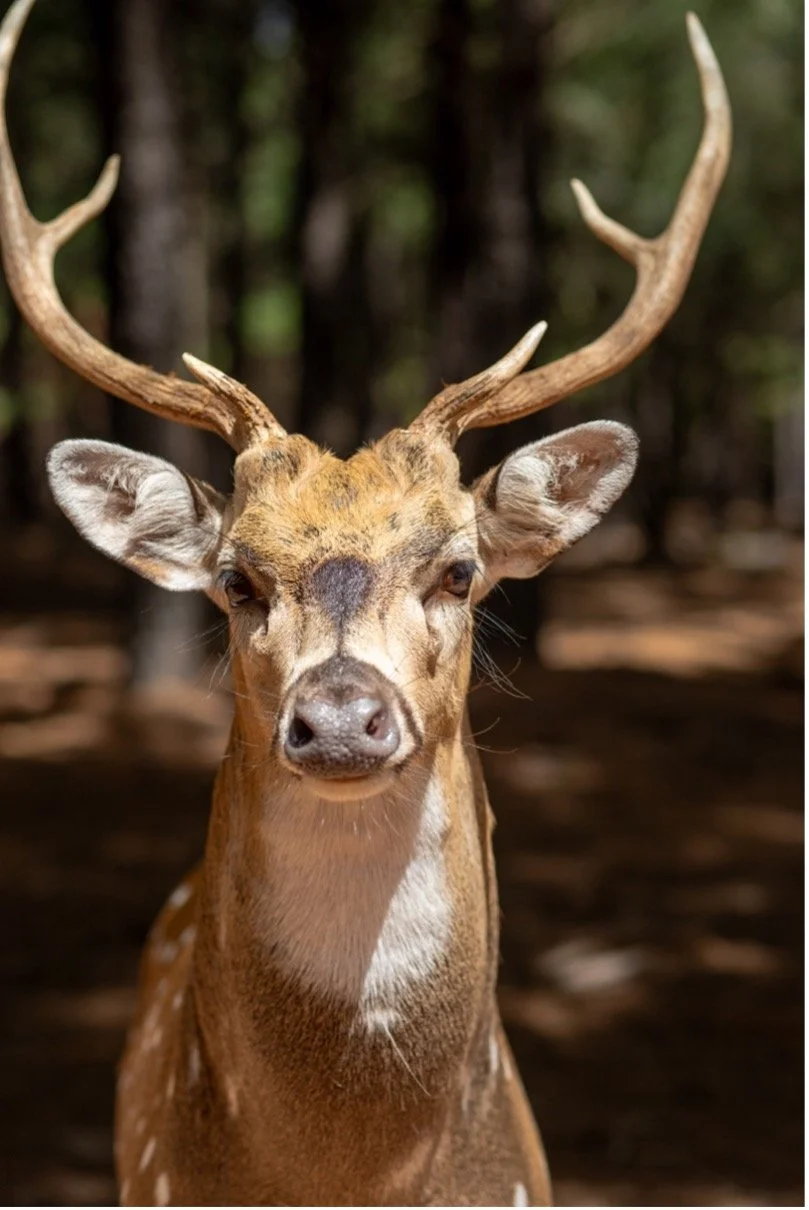
Figure 1 Male axis deer; Photo by Alexandra Holdbrook
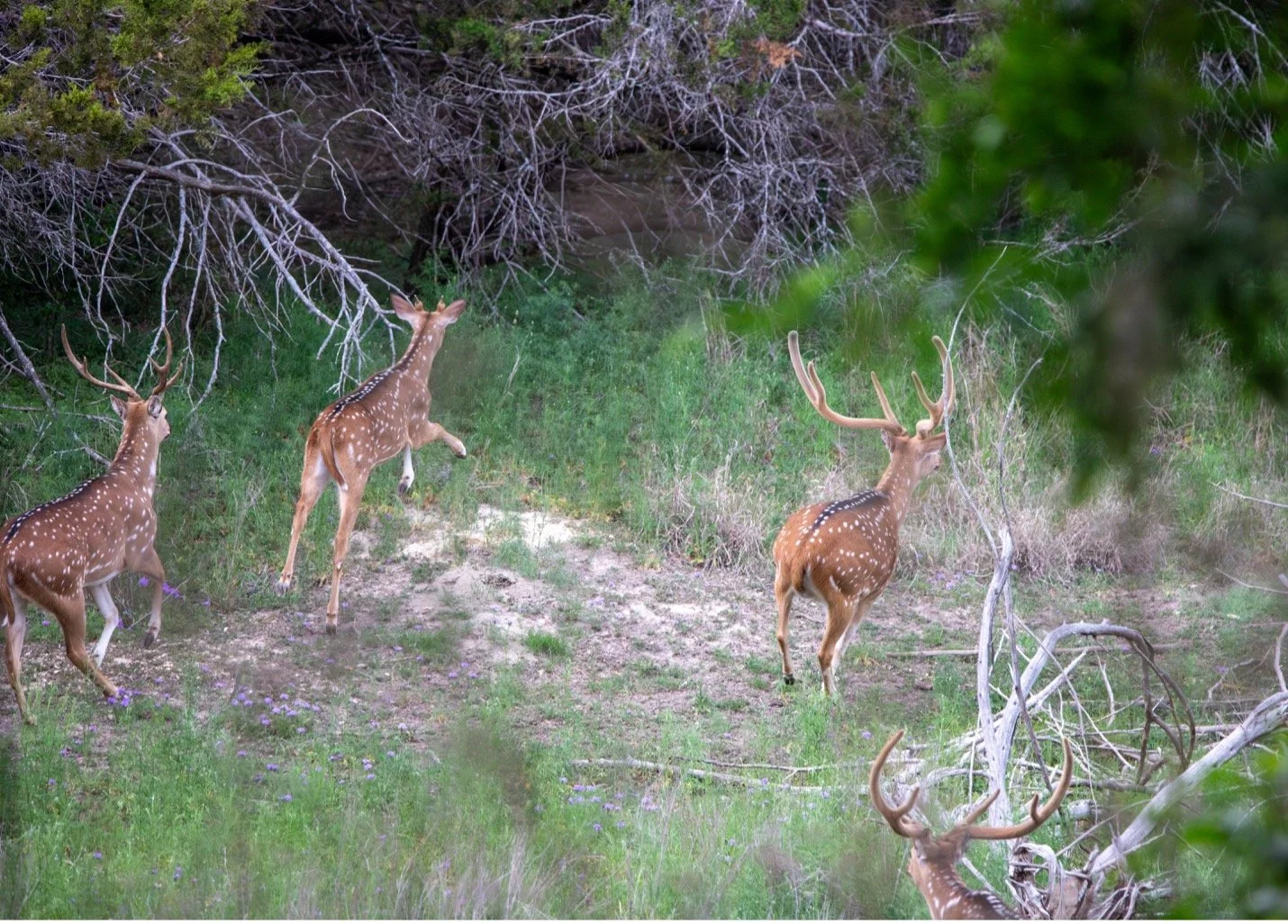
Figure 1 Group of 4 axis deer run for shelter; Photo by Alexandra Holdbrook
Works Cited
Buchholz, M. J. (2022). Ecology of free-ranging axis deer (Axis axis) in the Edwards Plateau Ecoregion of Central Texas: population density, genetics, and impacts of an invasive deer species.
Collard, R.-C., & Dempsey, J. (2013). Life for sale? The politics of lively commodities. Environment and Planning A, 45(11), 2682-2699.
Haraway, D. J. (2016). Staying with the Trouble: Duke University Press.
Mungall, E. C., & Sheffield, W. J. (1994). Exotics on the range: the Texas example: Texas A and M University Press.
Ogden, L. A., Hall, B., & Tanita, K. (2013). Animals, plants, people, and things: A review of multispecies ethnography. Environment and society, 4(1), 5-24.
Traweek, M., & Welch, R. (1992). Exotics in Texas: Texas Parks and Wildlife Department Austin.
Van Dooren, T., Kirksey, E., & Münster, U. (2016). Multispecies Studies Cultivating Arts of Attentiveness. Environmental Humanities, 8(1), 1-23.
U.S. Department of Agriculture. (2020). Exotic Animals and Horses, Voluntary Inspection (9 C.F.R. § 352). Code of Federal Regulations. https://www.govinfo.gov/content/pkg/CFR-2020-title9-vol2/pdf/CFR-2020-title9-vol2-part352.pdf